
How to Mop a Bathroom Floor the Right Way (Step by Step)

Disclosure: FloorsMop is reader-supported. As an Amazon Associate, we earn from qualifying purchases. If you buy through a link on this page, we may earn a small commission at no extra cost to you. Learn more.
Quick answer: Clear the floor, vacuum or sweep (including behind the toilet), wipe the toilet base with a disposable cloth or a separate cloth, then mop from the far corner toward the door with a pH-neutral cleaner. Rinse, dry the floor, and wash the mop head. Keep a separate mop or pad just for the bathroom.
What You Need
- Vacuum or broom and dustpan
- A microfiber mop or a spin mop, used only for bathrooms
- A pH-neutral floor cleaner, or a bathroom cleaner safe for your floor
- A soft grout brush
- Disposable wipes or a dedicated cloth for the toilet area
- Gloves
Step-by-Step
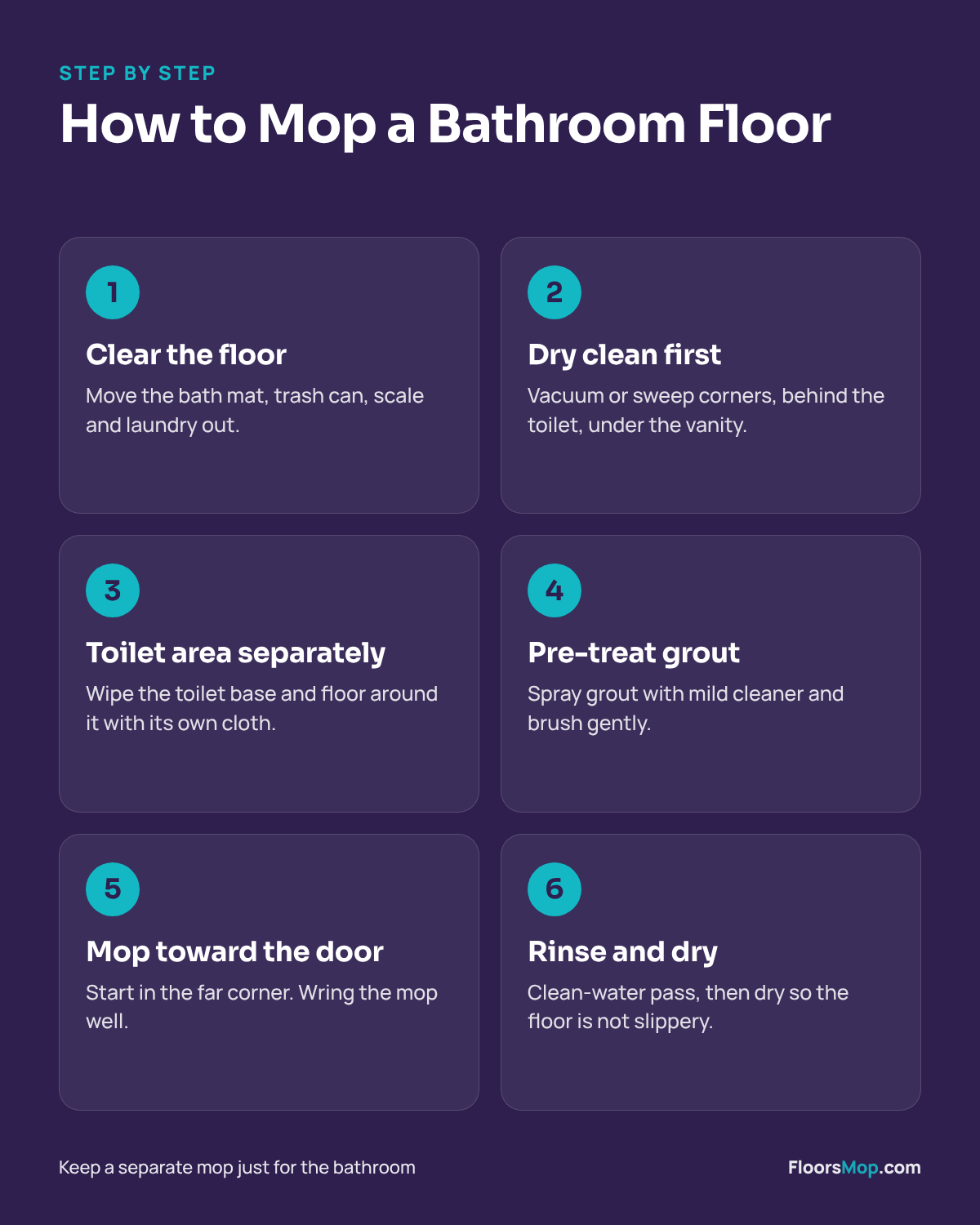
- Clear the floor. Remove the bath mat, trash can, scale, and laundry.
- Dry clean first. Vacuum or sweep, paying attention to corners, behind the toilet, and under the vanity. Hair and dust turn into muddy streaks if you mop over them.
- Clean the toilet area separately. Wipe the toilet base, the floor around it, and the wall behind it with a disposable wipe or a separate cloth. This is the dirtiest part of the room; do it before mopping so you do not spread germs.
- Pre-treat grout. Spray grout lines with a mild cleaner and brush them gently.
- Mop toward the door. Start in the far corner and work back. Wring the mop well.
- Rinse. Mop again with clean water to remove cleaner residue, which can make bathroom floors slippery.
- Dry. Use a dry microfiber pad or towel. Bathroom floors stay damp and slippery otherwise.
- Clean the tools. Wash the mop head in hot water and let it dry. Do not use the bathroom mop in the kitchen.
Cleaners by Bathroom Floor Type
| Floor | Use | Avoid |
|---|---|---|
| Ceramic and porcelain tile | pH-neutral cleaner; diluted vinegar for soap scum | Bleach on colored grout (it can fade) |
| Vinyl and LVP | pH-neutral vinyl cleaner | Abrasive pads, wax |
| Marble and stone | Stone-safe neutral cleaner | Vinegar, lemon, bleach, acidic toilet-bowl cleaners |
| Sealed concrete | Neutral cleaner | Acids that etch the sealer |
Never mix cleaners. Bleach plus ammonia or bleach plus vinegar releases toxic gas. Toilet-bowl cleaners often contain acid; keep them off stone floors.
How to Disinfect a Bathroom Floor
Routine mopping removes most germs. If someone is sick, use an EPA-registered disinfectant that is safe for your floor, and leave it wet for the contact time on the label before rinsing. See what to mop floors with to disinfect.
Removing Soap Scum and Water Spots
Soap scum is soap mixed with hard-water minerals. On tile and vinyl, a rinse of 1/2 cup vinegar per gallon of water lifts it. See how to remove water spots from floors.
How to Make Bathroom Floors Less Slippery
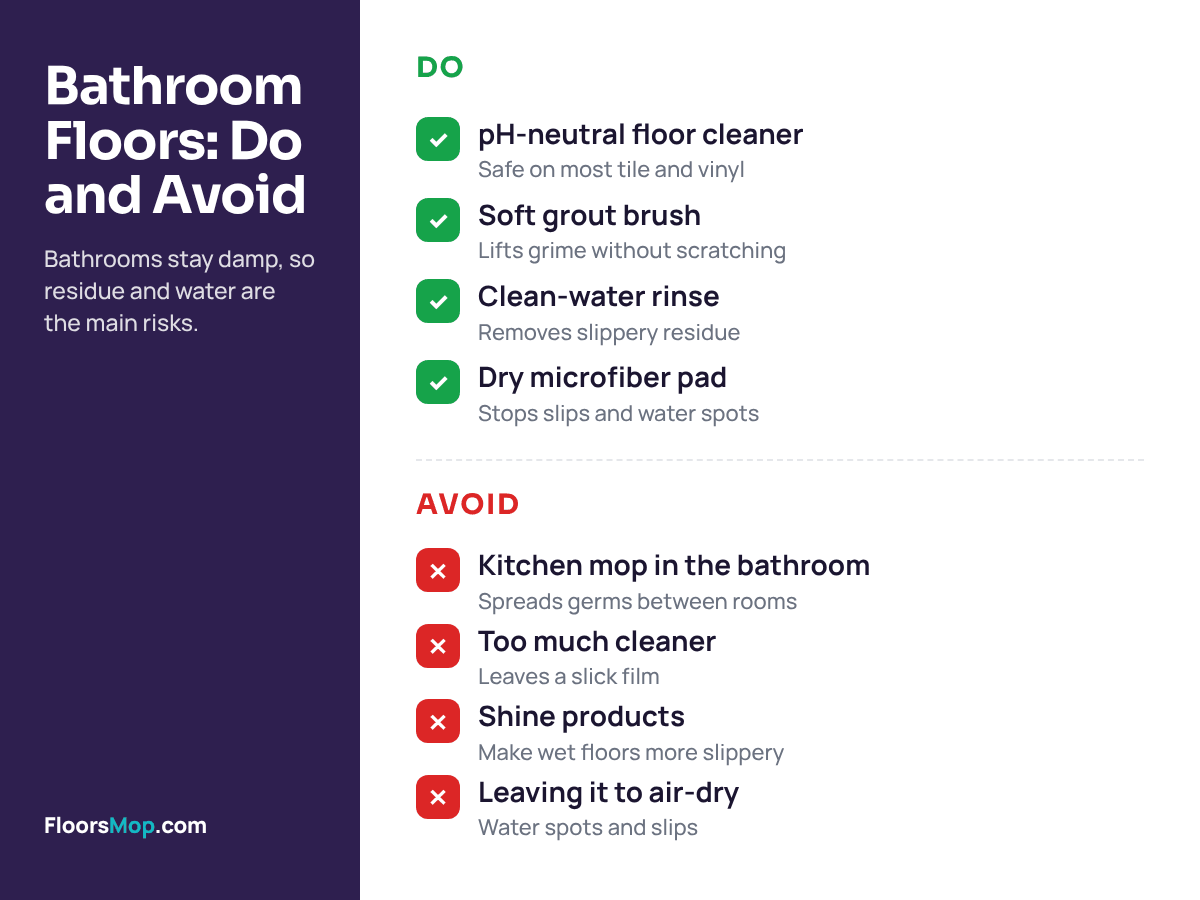
- Rinse off cleaner residue and dry the floor after mopping.
- Use a non-slip bath mat and wipe up shower drips.
- Avoid shine products. More tips in why floors are slippery after mopping.
How Often to Mop a Bathroom
Weekly for most homes, plus a quick wipe around the toilet every few days. Busy family bathrooms may need it twice a week. See how often you should mop.
Helpful Products
- Bona Hard-Surface Floor Cleaner for tile and vinyl.
- A grout brush for the lines between tiles.
- A compact spin mop you keep for the bathroom. See what a spin mop is.
FAQs
Should I use a separate mop for the bathroom?
Yes. A dedicated mop or pad keeps bathroom germs out of the kitchen and living areas.
Can I steam mop a bathroom floor?
On sealed tile with sealed grout, yes. Avoid steam on vinyl unless the maker approves it, and never on unsealed stone. See are steam mops good for tile.
Is vinegar safe for bathroom floors?
On ceramic and porcelain tile and most vinyl, diluted vinegar is fine. Never use it on marble or other natural stone.
How do I clean behind the toilet?
Use a disposable wipe or a small cloth on a flat mop, and do it before you mop the rest of the floor.