
Muddy Entryway vs Water Broom Which Cleans Better

A water broom is better for open, durable outdoor surfaces with good drainage, while manual sweeping and scraping are better for thick mud near a doorway. For most muddy entryways, the safest result comes from removing the bulk first and using only limited water where the floor can handle it.
When a muddy entryway turns into a daily cleanup job, it is tempting to reach for the fastest rinse method available. A water broom can be useful on some outdoor surfaces, but it is not always the best answer for sticky mud, tracked-in grit, or corners near the door.
In this guide, FloorsMop breaks down the muddy entryway vs water broom question in a practical way so you can choose the safer, cleaner method for your porch, patio, or front entrance. The right choice depends on the surface, the amount of mud, and how much runoff your space can handle.
- Water broom use: Best on open outdoor slabs with strong drainage.
- Manual cleanup: Better for thick mud, corners, and thresholds.
- Surface safety: Seams, grout, and worn sealers need extra caution.
- Cleanup order: Scrape first, rinse second, dry last.
- Professional help: Needed for damage, drainage issues, or specialty floors.
Muddy Entryway vs Water Broom: What Each Tool Is Designed to Clean
A muddy entryway is usually a mixed mess: wet soil, grit, leaves, and water all in one spot. That kind of buildup often clings to textured flooring, settles in joints, and gets pushed deeper if you use the wrong cleaning method.
A water broom is designed to rinse larger outdoor flat areas with a fan of water. It can move loose debris quickly, but it works best when the mess is already broken up and the floor can drain well. It is less precise than hand cleaning, which matters near thresholds and trim.
- Loose dirt on open outdoor slabs
- Quick rinsing of patios and driveways
- Regular maintenance on durable hardscape
- Heavy mud packed near doorways
- Textured joints and narrow corners
- Surfaces that drain poorly
How Muddy Entryways Happen in Real Homes and Why Cleanup Gets Tricky
Entryway mud is common because the area between outdoors and indoors catches everything people, pets, and gear bring in. It is also one of the hardest spots to clean because the mess changes from day to day.
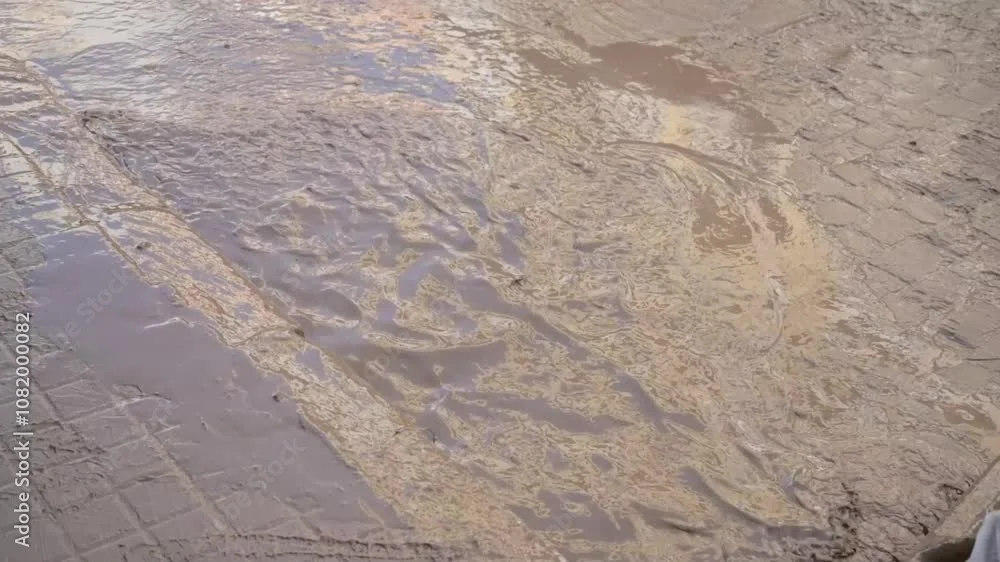
Seasonal mud, rain, snowmelt, and high-traffic family entrances
Rainy weather softens soil and turns simple dirt into slippery sludge. Snowmelt can do the same, especially when boots carry a mix of salt, sand, and wet grit onto the landing.
Busy family entrances often get repeated foot traffic before the floor has time to dry. That means the mud is not just sitting on top; it gets pressed into the surface and spread from one step to the next.
Porch-to-entry transitions, pet tracking, and stroller or boot messes
Porch-to-entry transitions are especially messy because they combine outdoor debris with indoor flooring concerns. Dogs, strollers, sports gear, and work boots all create different kinds of residue, and not all of it rinses away easily.
If you are also dealing with sticky residue after repeated wipe-ups, it may help to review related cleaning issues like busy household floor cleanup challenges and how over-wet cleaning can leave a film behind.
Water Broom Cleaning Performance on Different Outdoor and Patio Surfaces
Water brooms are not one-size-fits-all. Their performance changes a lot depending on surface texture, slope, and whether the area is sealed or porous.
Concrete, stamped concrete, and broom-finished slabs
Plain concrete is usually the easiest match for a water broom because it is durable and can tolerate rinsing better than many decorative finishes. Broom-finished slabs also give water a path to move, which helps carry loosened dirt away.
Stamped concrete can be trickier. The texture may trap mud in low spots, and if the sealant is worn, a strong rinse may move dirty water around instead of lifting it cleanly.
Brick, pavers, tile, and sealed stone
Brick and pavers often have joints that collect muddy residue. A water broom can help flush surface dirt, but it may also drive sludge into the gaps if the area is already saturated.
Outdoor tile and sealed stone can usually handle rinsing better, but grout lines, worn sealers, or uneven installation can still leave muddy streaks behind. If you are unsure how a surface reacts to water, a small test area is the safer first step.
Where a water broom works well and where it can spread muddy residue
A water broom works well on open, sloped, durable surfaces where runoff can move away from the house. It is less effective when the mess is thick, sticky, or concentrated near the threshold.
In those cases, the tool can spread muddy residue instead of removing it. That is especially true when the water pushes soil toward corners, under mats, or into seams that are hard to reach later.
Do not blast heavy mud toward the doorway. If runoff has nowhere to go, you can create a wider mess and increase slip risk right at the entrance.
Best Cleaning Method for Muddy Entryways: Water Broom vs Manual Cleanup
For a muddy entryway, the better method is usually the one that removes soil without pushing it deeper into the floor or toward the house. In many homes, that means a mix of dry cleanup first and water only where it is truly useful.
When rinsing with a water broom saves time
A water broom can save time when the mess is spread across a large outdoor area and the soil is loose enough to rinse away. It is also useful after you have already scraped up heavy clumps and just need to flush the remaining film.
If the entry space has strong drainage and the floor is made of durable concrete or sealed hardscape, rinsing can be a practical final step. For some outdoor cleanup routines, it helps to think about where water should go before you start, similar to the planning discussed in where cleaning water should be disposed.
When sweeping, scraping, and spot-mopping work better
Manual cleanup is usually better when the mud is thick, sticky, or packed into a small zone near the door. A stiff broom, scraper, or absorbent cloth can remove the bulk without sending dirty water everywhere. [Source: Healthline]
Spot-mopping also works better on edges, corners, and narrow landings where a water broom cannot direct flow accurately. It gives you more control, which matters when the floor transitions from outdoor hardscape to indoor flooring.
Practical examples: driveway-to-door mud, porch corners, and doormat buildup
Driveway-to-door mud often starts as loose soil and becomes a tracked path. A water broom may help on the driveway portion, but the area closest to the door is usually better handled with scraping and wiping.
Porch corners tend to trap leaves and damp grit, so a hand tool is usually more effective there. Doormat buildup is another example: lift the mat, shake it out, scrape underneath, then rinse only if the surface can drain freely.
- Remove loose debris before adding water
- Check where runoff will travel
- Clean corners and joints by hand
- Dry the threshold area to reduce slip risk
Floor-Type Compatibility: Which Surfaces Can Handle Each Option Safely
Compatibility matters because the wrong amount of water can damage finishes, weaken joints, or make indoor transitions slippery. When in doubt, choose the gentlest method that still removes the mess.
Exterior concrete and hardscape durability considerations
Exterior concrete is generally more forgiving than many other surfaces, but durability does not mean unlimited water is always safe. If the slab has cracks, settling, or poor slope, rinse water can pool and leave dirty marks behind.
Hardscape surfaces that are older or patched may also shed grit when scrubbed too aggressively. A lighter touch is usually better than repeated high-pressure rinsing.
Sealed vs unsealed surfaces and grout or joint concerns
Sealed surfaces usually resist muddy staining better, but the seal can wear unevenly over time. Unsealed surfaces absorb grime faster, which makes a water broom less efficient and may require more follow-up cleaning.
Grout and joints are a major concern on pavers, tile, and stone. Water can carry dirt into those gaps, where it settles and becomes harder to remove later.
Indoor entry floors that should not be over-wet
Indoor entry floors often need a much drier approach than outdoor hardscape. Wood, laminate, some luxury vinyl installations, and many specialty finishes can be sensitive to excess water at the threshold.
If muddy water has already crossed indoors, use minimal moisture and dry cloths first. If you are dealing with a delicate finish or recurring stickiness after cleanup, a related guide on sticky floor cleanup mistakes can help you avoid over-wetting the surface.
Common Cleaning Mistakes That Make Muddy Entryways Worse
The biggest cleanup problems usually come from moving too fast. Mud is easier to remove when you slow down and keep control of the water path.
Using too much water and pushing sludge toward the threshold
Too much water can turn a manageable mess into a muddy stream. Instead of lifting debris, it pushes sludge toward the threshold and into places that are harder to dry.
This is one reason a water broom can underperform on entryways. It may look efficient at first, but the final cleanup becomes more complicated if the water volume is too high.
Ignoring drainage, slope, and runoff direction
Drainage and slope matter more than many people expect. If the surface slopes toward the home, rinse water can travel in the wrong direction and collect where you least want it.
Before using any rinse method, look at the path water will take. If runoff is unpredictable, manual cleanup is usually the safer choice.
Scrubbing abrasive grit into finishes or letting mud dry too long
Grit acts like sandpaper when it is dragged across a finish. Hard scrubbing can scratch some surfaces, especially if the mud has already started to dry.
Letting mud dry too long also makes it harder to remove cleanly. A quick dry pickup is usually better than waiting and then using more force later.
For best results, remove the bulk of the mud while it is still damp, then do a light rinse only if the floor and drainage can handle it.
Cost, Convenience, and Maintenance: Which Option Makes More Sense in 2025
Cost is not just the price of the tool. It also includes water use, setup time, storage, and how often you will need to repeat the cleanup. [Source: Wikipedia]
Tool cost, water use, setup time, and storage
A water broom can be convenient if you already have compatible hose access and enough outdoor space to use it safely. The tradeoff is that it usually takes more setup than grabbing a broom and scraper.
Manual cleanup is cheaper to start and easier to store. It also uses less water, which matters if you are cleaning often or only dealing with small muddy spots.
Maintenance needs for hoses, nozzles, and entry mats
Water brooms depend on hose condition, nozzle performance, and regular rinsing after use. If the tool clogs or sprays unevenly, cleanup becomes less effective and more frustrating.
Entry mats also need maintenance because they are your first defense against tracked-in soil. A dirty mat can make even a good cleaning routine feel ineffective.
The lowest-cost option is not always the best value. A simple broom-and-scrape routine may save time and water if your entryway only gets muddy in small, frequent bursts.
Which option fits busy households, rental properties, and seasonal cleanup
Busy households often need the fastest routine that still protects the floor. That usually means dry cleanup first, then selective rinsing only when the surface and drainage allow it.
Rental properties may benefit from a simple, repeatable method that different people can follow. Seasonal cleanup, especially after storms or snowmelt, may justify using a water broom on the exterior portion while keeping the indoor threshold dry.
When to Ask a Flooring Professional and Final Verdict for FloorsMop Readers
Most muddy entryway cleanup can be handled with common tools, but some situations call for extra caution. If the floor is expensive, damaged, or unusually sensitive, professional advice can save money and prevent avoidable wear.
Signs of surface damage, loose grout, staining, or recurring drainage issues
Ask for help if you notice cracking, loose grout, recurring pooling, or stains that return after cleaning. Those are signs the issue may be structural, not just surface-level dirt.
Repeated runoff toward the house is another warning sign. If water keeps moving the wrong direction, the cleanup method may need to change along with the drainage setup.
When professional advice is needed for delicate or specialty flooring
Specialty flooring, decorative stone, older sealed surfaces, and certain indoor finishes may need product-specific guidance. A method that works on one entryway can be too harsh for another.
If you are unsure about warranty concerns, sealant compatibility, or whether a surface should be rinsed at all, ask a flooring professional before experimenting.
Recap: choosing the better cleanup method based on mess level, floor type, and safety
For the muddy entryway vs water broom decision, the winner depends on the mess and the surface. A water broom is better for open, durable, well-drained outdoor areas, while manual cleanup is better for thick mud, tight corners, and threshold zones.
In most homes, the safest approach is a combination: scrape first, sweep second, and rinse only when the floor can handle it. That keeps cleanup faster, protects the finish, and reduces the chance of turning one muddy entryway into a bigger problem.
Frequently Asked Questions
It can work well on open outdoor concrete or other durable hardscape. It is less effective when mud is thick, sticky, or packed near a doorway.
Start by removing loose debris with a broom or scraper. Then use only a small amount of water if the surface and drainage can handle it.
It can if the surface has weak joints, worn sealant, or poor drainage. Water may push muddy residue into gaps and make cleanup harder.
Usually not with much water. Indoor floors are often better cleaned with dry pickup and minimal moisture to avoid slipping or surface damage.
Check mats, traffic patterns, and drainage first. If water keeps pooling or soil keeps tracking in, the problem may need a layout or flooring review.
Call a professional if you see cracks, loose grout, staining, or a delicate surface finish. It is also wise to ask before using water on specialty flooring or warranty-sensitive materials.
