Are There Steam Mops With Disposable Pads?

Quick Answer
Yes—some steam mops can use disposable pads through a dedicated disposable-pad tray or model-specific single-use pad system. As of 2026, BISSELL still lists a disposable mop pad kit for compatible Symphony steam mops, while many other steam mops rely mainly on washable microfiber pads.
What to know before buying
- Compatibility matters: A disposable pad must fit the exact mop head or approved adapter.
- Single-use convenience: Disposable pads are useful for pet messes, greasy spots, and jobs you do not want in the laundry.
- Higher running cost: You keep buying refills, unlike reusable microfiber pads.
- More household waste: Each used pad goes in the trash after cleaning.
- Floor safety comes first: A disposable pad does not make steam safe for a floor that should not be steam-cleaned.
Best rule
- Buy the mop for floor compatibility and cleaning performance first, then choose disposable or washable pads based on convenience.
If you like the cleaning power of a steam mop but hate washing dirty pads, disposable pads can sound ideal. I have found they are most useful for unpleasant one-off messes rather than everyday whole-house cleaning.
This guide explains which systems exist, what they cost you in convenience and waste, and when a washable microfiber flat mop is still the smarter choice.
In This Guide
- What Is a Steam Mop With Disposable Pads?
- Are There Steam Mops With Disposable Pads in 2026?
- Disposable vs. Washable Steam Mop Pads
- When Do Disposable Steam Mop Pads Make Sense?
- What Should You Check Before Buying?
- Are Disposable Steam Mop Pads Safe for Every Floor?
- How Do You Use Disposable Steam Mop Pads Correctly?
- Frequently Asked Questions
- Final Takeaway
What Is a Steam Mop With Disposable Pads?

A steam mop with disposable pads is a floor steamer designed to hold a single-use cleaning sheet under its mop head. The pad picks up loosened grime and is thrown away after the job.
That is different from the usual steam mop setup. Most models send steam through a washable microfiber pad that you remove, rinse, machine-wash, dry, and reuse.
There are three common pad setups
- Dedicated disposable-pad system: The mop is designed around branded single-use pads or sheets.
- Disposable-pad tray or adapter: A special tray clips under a compatible steam mop and holds the throwaway pad.
- Reusable microfiber system: The standard head uses washable cloth pads and may not accept disposable sheets at all.
Do not assume a rectangular disposable floor wipe will work because it looks the right size. Steam, heat, attachment points, and the path of vapor through the pad all affect safe operation.
A pad that blocks steam ports can leave the mop wet, hard to push, or unevenly heated. A loose sheet can also bunch under the head and reduce cleaning contact.
A simple definition: A disposable steam mop pad is a model-compatible, single-use sheet that sits between the steam head and the floor, collecting soil before being discarded.
Are There Steam Mops With Disposable Pads in 2026?
Yes, but they are less common than steam mops that use washable microfiber pads. The clearest current example is the BISSELL Symphony family, which supports a dedicated disposable-pad tray on compatible models.
BISSELL lists its disposable kit with one tray and 10 disposable pads. That makes it a true manufacturer-supported option rather than a homemade sheet wrapped around a steam head.
Why disposable-pad models are less common
Steam mops already reduce the need for bottled floor cleaner, so reusable pads fit the same low-consumable design. Manufacturers can also make thick microfiber pads that scrub, absorb moisture, and survive repeated washing.
- Reusable pads absorb more: Thick microfiber usually holds more moisture and loosened dirt than a thin wipe.
- They stay attached better: Hook-and-loop systems or fitted pockets keep the pad flat while you push.
- They reduce refill dependence: You can keep several clean pads ready without buying boxes of refills.
- They suit larger rooms: A fresh washable pad can cover more floor before becoming overloaded.
Disposable systems still solve a real problem. They are appealing when the dirt itself is something you would rather seal in the trash than put in a washing machine.
Do not confuse “disposable” with “steam-safe”
Many dry and wet floor wipes are made for spray mops, not steam mops. A wet wipe may contain cleaners, fragrance, binders, or plastic layers that were never intended for high heat.
Use only the disposable pad, tray, or sheet type approved for your exact steam mop. If the owner’s manual does not mention it, treat the combination as unsupported.
Disposable vs. Washable Steam Mop Pads
Disposable pads win on convenience, while washable microfiber wins on cost and waste. For most routine floor cleaning, I prefer keeping three or four reusable pads and changing them as soon as they look gray.
| Feature | Disposable Pad | Washable Microfiber Pad |
|---|---|---|
| Typical use | One cleaning session, then trash | Repeated use after washing |
| Mess handling | No dirty pad laundry | Pad must be rinsed or washed |
| Ongoing cost | Refill packs required | Lower after buying spare pads |
| Household waste | Higher | Lower |
| Best for | Pet accidents, greasy spills, unpleasant messes | Weekly kitchens, bathrooms, and larger areas |
Which option costs less?
Washable pads usually cost less over time because one pad serves many cleaning sessions. Disposable pads create a small cost every time you mop.
The exact break-even point depends on refill prices, how large your floor is, and how often you change pads. A home that steam-cleans twice weekly will notice refill costs much sooner than an apartment using steam once a month.
Which option cleans better?
Cleaning performance depends more on pad construction and how dirty the pad becomes than on whether it is disposable. Thick microfiber generally gives you more texture for scrubbing and more material for holding loosened soil.
A disposable pad can still work well on a small, controlled mess. Change it early if the surface looks saturated or starts smearing dirt.
When Do Disposable Steam Mop Pads Make Sense?
Disposable pads make the most sense when convenience and containment matter more than refill cost. They are a specialty option, not automatically the best everyday choice.
Good situations for single-use pads
- Pet messes: You can remove the pad and throw the mess away instead of washing it with household cloths.
- Greasy kitchen spots: A fresh pad avoids carrying oily residue into the next room.
- Entryway grime: Mud, road film, and salty residue can quickly overload a reusable pad.
- Small bathrooms: A single pad can handle a compact area without creating another laundry item.
- Occasional steam cleaning: Refill cost matters less when the mop comes out only a few times each month.
I especially like the idea after a pet tracks something unpleasant onto sealed tile. That is one job where “clean it and toss it” has a clear practical advantage.
When washable pads are the better choice
- Large floor areas: Reusable pads are economical when you need several pad changes per session.
- Frequent cleaning: Weekly or twice-weekly use makes disposables expensive quickly.
- Light everyday soil: Dust, footprints, and ordinary kitchen residue do not usually justify a throwaway pad.
- Waste reduction: Washable microfiber avoids sending a pad to the trash after every use.
If you already own a microfiber flat mop, it can also handle many routine jobs without steam. That is often the gentler option on moisture-sensitive flooring.
What Should You Check Before Buying?
Start with the floor, not the pad. A convenient disposable system is a poor buy if steam is not recommended for the surfaces in your home.
1. Confirm exact pad compatibility
Look for the model number in the accessory listing or owner’s manual. “Universal” claims deserve extra caution around steam because blocked vents or weak attachment can affect operation.
2. Check refill availability
A disposable-pad feature is only useful while refills remain easy to buy. Search the current manufacturer accessory page before choosing an older or discontinued steam mop.
3. Look at the attachment method
Dedicated trays are preferable to improvising with a sheet around the mop head. The pad should sit flat and leave the steam outlets working as designed.
4. Compare whole-house running cost
Estimate how many pads you would use per month, not just the price of the mop. A low purchase price can hide years of refill spending.
5. Decide whether you need steam at all
A spray mop or microfiber flat mop may be simpler for quick daily cleaning. Steam is most useful when the floor manufacturer allows it and you need heat to loosen stuck-on grime.
If you use a chemical cleaner separately, choose one made for your floor finish and follow its label. The EPA Safer Choice program can help you identify products that meet its ingredient and performance criteria.
Safety note: Never pour floor cleaner, disinfectant, vinegar, essential oil, or fragrance into a steam mop tank unless the manufacturer explicitly allows it.
Are Disposable Steam Mop Pads Safe for Every Floor?
No. The pad type does not change the heat and moisture coming from the machine, so disposable pads cannot make an unsafe floor steam-safe.
Hardwood and engineered wood
The National Wood Flooring Association advises against wet mops and steam mops on wood floors. Steam can damage the finish and wood over time.
For wood, use a dry or slightly damp microfiber method recommended by the flooring or finish manufacturer. Keep standing moisture off seams and edges.
Laminate and LVP
Many laminate and luxury vinyl plank manufacturers restrict steam because heat and moisture can affect seams, layers, or adhesives. Check the exact care guide for your product before using a steam mop.
If the manufacturer does not clearly approve steam, use a lightly damp microfiber mop instead. That is the safer default.
Tile, stone, and concrete
Sealed ceramic and porcelain tile are common steam-mop candidates, but grout, sealers, and repairs can change the answer. Natural stone needs extra care because finishes and sealers vary.
Concrete also varies by coating and sealant. Always follow the surface manufacturer’s maintenance instructions rather than assuming every hard floor tolerates heat.
Safety note: Test an inconspicuous area first when the floor maker allows steam, and stop if you see whitening, softening, lifting, haze, or excess moisture.
How Do You Use Disposable Steam Mop Pads Correctly?
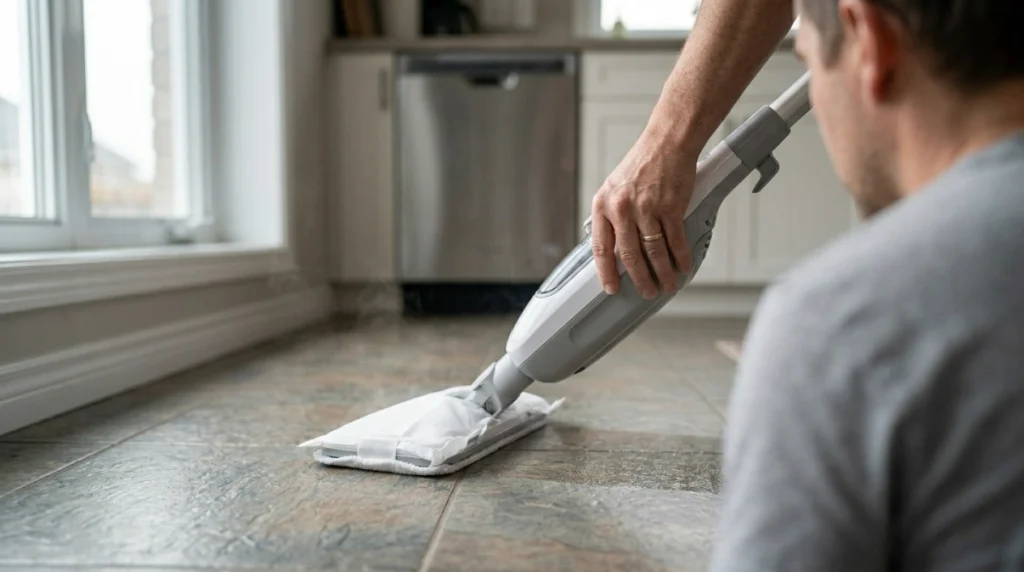
Use the same careful prep you would use with a washable pad. The biggest mistakes are steaming over loose grit, continuing with a dirty pad, and holding the hot mop in one place.
- Vacuum or sweep first. Remove hair, crumbs, sand, and grit that can scratch or turn into muddy streaks.
- Check the floor care guide. Confirm the surface allows steam before filling the mop.
- Fill with approved water. Use the water type specified in the manual, especially in hard-water areas.
- Attach the correct tray and pad. Keep steam outlets clear and make sure the pad lies flat.
- Heat the mop as directed. Wait for the ready indicator rather than forcing steam early.
- Keep the head moving. Use controlled passes and avoid parking the hot mop on one spot.
- Change the pad when loaded. A dirty disposable pad can smear grime instead of lifting it.
- Let the floor dry. Keep people and pets off damp areas until they are dry and not slippery.
- Dispose of the used pad. Follow the pad maker’s instructions and local waste rules.
Does steam replace disinfectant?
Not automatically. Cleaning removes dirt and many germs, while disinfecting is a separate process that uses a product or method with specific directions and contact conditions.
The CDC cleaning and disinfecting guidance recommends routine cleaning and reserving disinfection for situations where it is needed, such as illness in the home.
Can you use any disposable floor wipe on a steam mop?
No. Do not attach a generic wet wipe, dry sheet, or spray-mop refill unless the steam-mop manufacturer says it is compatible.
Heat may change how a pretreated wipe behaves, while a thick or plastic-backed sheet may obstruct steam. An approved disposable pad is the safer choice.
Frequently Asked Questions
Do Shark steam mops use disposable pads?
Many current Shark steam mops are built around washable microfiber or Dirt Grip pads rather than single-use sheets. Because Shark has sold different systems over time, check the exact model number and current accessory list before buying disposable refills.
Does BISSELL make a steam mop with disposable pads?
Yes—compatible BISSELL Symphony vacuum-and-steam models can use a dedicated disposable-pad tray, and BISSELL currently lists replacement disposable pad kits. Check your model number because not every BISSELL steam mop uses the same tray or pad system.
Are disposable steam mop pads good for pet messes?
They can be a practical choice for small pet messes on a floor that is approved for steam. The main benefit is containment: you remove the dirty pad and discard it instead of rinsing or machine-washing a reusable microfiber pad.
Can I put a Swiffer pad on a steam mop?
Only if the steam-mop manufacturer specifically approves that pad or adapter for your model. Ordinary Swiffer-style wet or dry sheets are not automatically steam-safe, and an unsupported sheet may block vapor, slip off, or expose floor coatings to unwanted chemicals.
Are disposable steam mop pads better than microfiber pads?
They are better for convenience and unpleasant one-off messes, but not usually for cost or waste. Washable microfiber pads make more sense for regular whole-house cleaning because you can rotate several clean pads and reuse them after washing.
How often should I change a disposable steam mop pad?
Change it when the pad looks saturated, heavily soiled, or starts leaving streaks. For a dirty kitchen or entryway, that may happen before the room is finished, while a lightly soiled small bathroom may need only one pad.
Final Takeaway
Yes, steam mops with disposable pads do exist, but they are a smaller part of the market than washable-pad models. The most useful setups use a manufacturer-approved disposable tray rather than a generic sheet wrapped around the head.
Choose disposable pads for messes you want to throw away, and choose washable microfiber for routine cleaning. Above all, let your flooring manufacturer decide whether steam belongs on the floor at all.