
Can You Use Slippery Floors Safely at Home and Work

Yes, but only when the slipperiness is temporary and you can control the area safely. If the floor keeps feeling slick after cleaning, treat it as a hazard and fix the cause before regular use. Related: slippery floors. Related: floor slip risk. Related: slippery floor safety. Related: anti-slip mats. Related: floor cleaning residue.
Slippery floors are not something you want to ignore, whether you are dealing with a wet bathroom tile, a freshly mopped kitchen, or a busy workplace entryway. The real question behind can you use slippery floors is usually about safety: when is a floor still usable, and when does it need traction, drying, or repair first?
This guide from FloorsMop breaks down the floor types that get slick, the cleaning mistakes that make the problem worse, and the practical fixes that help without damaging the surface. If your floor stays sticky after cleaning, it may help to review our guide to a sticky floor after mopping and our floor drying tips after mopping as you compare the cause.
- Temporary vs. ongoing: Short-term wetness can be manageable; repeated slickness is a warning sign.
- Floor matters: Tile, wood, vinyl, stone, laminate, and concrete all need different care.
- Cleaning can cause slips: Too much soap, polish, or water often leaves a slippery film.
- Traction helps: Mats, runners, and strips work best when they stay flat and dry.
- Call a pro: Persistent slickness, damage, or commercial liability concerns deserve expert help.
Can You Use Slippery Floors Safely in 2025? What the Keyword Really Means
People often search this phrase when they are trying to figure out whether a floor is safe right now, not in theory. In most cases, they want to know if the slipperiness is temporary, like from water or cleaning residue, or if it points to a larger floor-care problem.
Why people search “can you use slippery floors” and what they usually need to solve
At home, the concern is often a fall risk in places like bathrooms, kitchens, laundry rooms, and entryways. In a workplace, the same issue can become more serious because more people are walking through the area, often while carrying items or moving quickly.
That is why the answer depends on the setting, the floor finish, and how much moisture is involved. A slightly damp floor may be manageable in one room for one adult, but not acceptable in a hallway, store aisle, or warehouse path where traffic is constant.
Safety concerns at home vs. in workplaces with high foot traffic
Home floors usually allow more control. You can block off a room, dry the surface, or add a mat until the slip risk passes.
Workplaces are different because the floor has to stay safe for many users, including visitors who may not know the surface is slick. When the area has high foot traffic, even a small slip hazard can become a repeat problem if it is not addressed quickly.
A floor does not have to look visibly wet to be slippery. Thin residue, humidity, or worn finish can reduce traction even when the surface appears clean.
Common Floor Types That Become Slippery and How Each One Behaves
Different floors become slippery for different reasons, and the fix should match the material. What helps on tile may be a bad idea on hardwood, and what works on vinyl may leave stone looking dull or streaky.
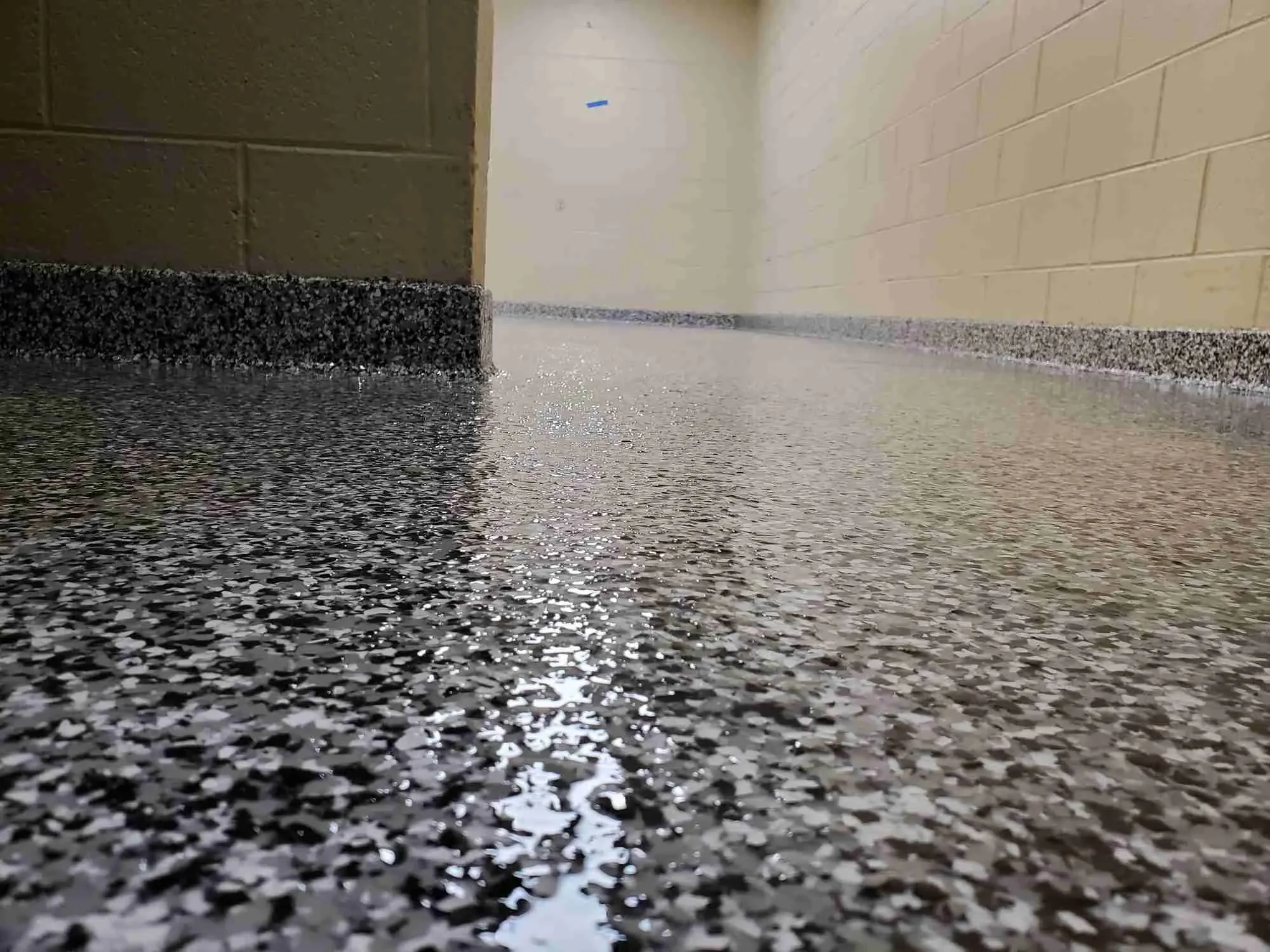
Tile, polished stone, vinyl, laminate, hardwood, and concrete
Tile can be slick when it is polished, glazed, or wet, especially if the grout lines are shallow or worn. Polished stone may also become slippery quickly if the surface finish is smooth and the room gets moisture often.
Vinyl and laminate usually feel safer when dry, but they can become slick when cleaner residue builds up or when too much water is used. Hardwood and engineered wood are especially sensitive to moisture, while sealed concrete can vary widely depending on texture and sealer type.
How finish, texture, and moisture affect slip risk
Texture matters because a matte or lightly textured finish usually gives better grip than a glossy one. Moisture matters because even a small amount of standing water can change how a floor behaves underfoot.
Finish also matters because wax, polish, or some sealers can make a floor feel smoother than intended. If the floor has a worn patch and a glossy patch side by side, traction may feel uneven from one step to the next.
Which floor types are most and least forgiving in kitchens, bathrooms, and entryways
Bathrooms are usually the least forgiving because water is common and shoes may be wet. Kitchens can also be risky because spills, grease, and cleaning residue can build up fast.
Entryways often collect rain, snow, or dirt, so a floor that seems fine in a dry room may become slippery near the door. For these areas, a surface that dries quickly and tolerates routine cleaning is usually easier to manage than one that needs delicate care.
When Slippery Floors Are Safe to Use and When They Are Not
Some slippery floors are temporarily usable with caution, while others should be treated as a hazard right away. The difference usually comes down to whether the problem is brief and obvious or persistent and unpredictable.
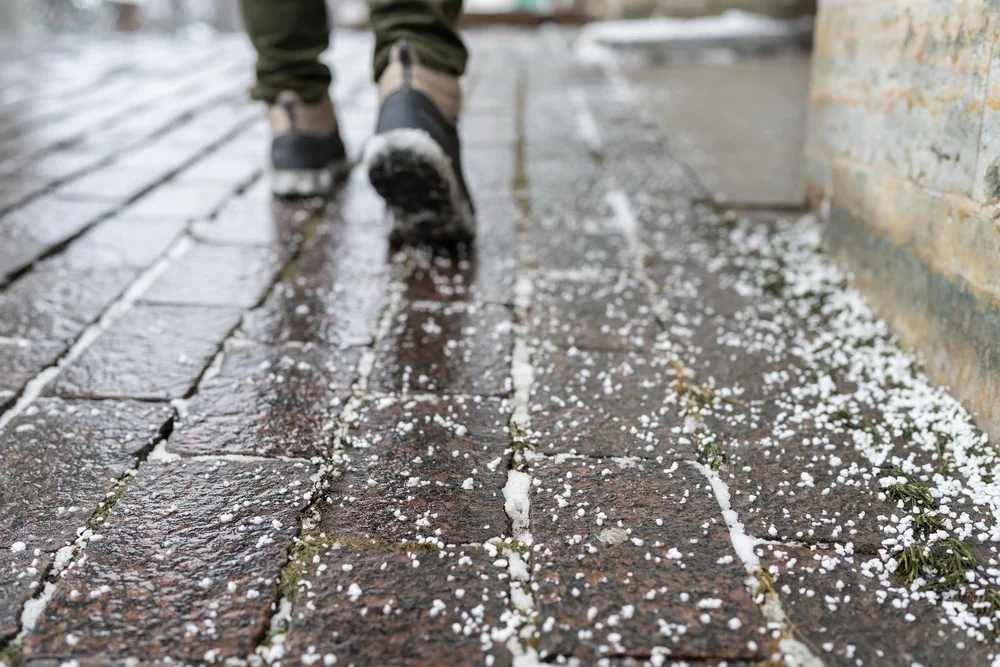
Temporary slickness from spills, cleaning residue, humidity, or new finishes
A small spill, a fresh mop pass, or a newly applied finish can create short-term slipperiness. Humidity can also make some surfaces feel slick, especially if the room does not dry out well after cleaning or shower use.
In those cases, the floor may be safe again once it is dry and the residue is removed. The key is to confirm that the problem is temporary before people start walking on it normally.
Signs the floor is still usable with caution
If the slickness is limited to one area, you can see the cause clearly, and the surface improves after drying, the floor may be usable with caution. A visible wet patch or a mild cleaning film is easier to manage than a hidden traction problem.
It can also help if the floor still has some texture underfoot and there is no wobbling, buckling, or surface damage. In those cases, blocking the area briefly and improving drying may be enough.
Red flags that mean the floor should be treated as a hazard immediately
Act fast if the slipperiness keeps returning, spreads across a large area, or happens even when the floor looks dry. That can point to residue buildup, a failing finish, moisture intrusion, or an incompatible product.
Unusual shine, soft spots, warping, peeling, or a strong chemical film are also warning signs. If people are already slipping or steady footing feels unreliable, the floor should be treated as unsafe until the cause is fixed.
Do not assume a floor is safe just because it looks clean. Glossy residue, excess water, or a worn finish can still create a serious slip hazard. [Source: Mayo Clinic]
Practical Ways to Reduce Slip Risk Without Damaging the Floor
The safest fix is usually the simplest one: remove the cause of the slickness and avoid adding new residue. That means choosing the right cleaner, using the right amount of water, and drying the surface fully.
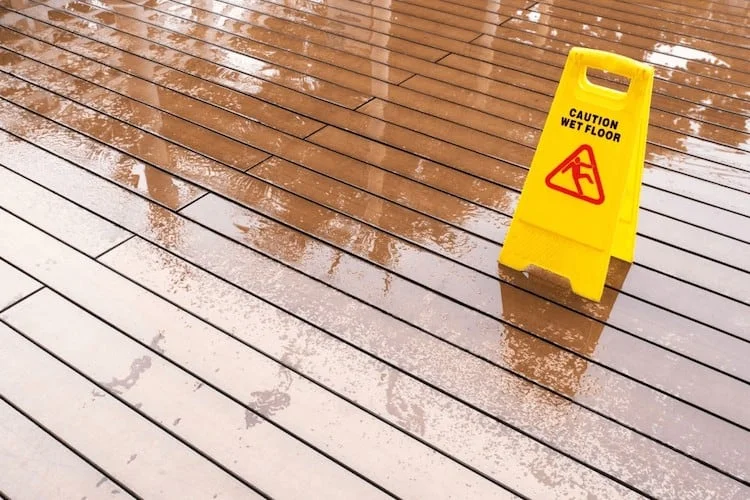
Choosing the right cleaner, mop method, and drying routine
Use a cleaner that matches the floor type and dilute it according to the label. Soap-heavy mixes can leave a film behind, while too much liquid can soak into seams, grout, or wood edges.
A damp mop is often better than a soaking-wet one. If you need a deeper look at technique, our floor mopping basics guide and how to dry a floor after mopping article can help you reduce leftover moisture.
Using mats, runners, traction strips, and non-slip pads correctly
Mats and runners help most when they stay flat, dry, and anchored. If a mat curls at the edge or slides on the floor, it can create a new hazard instead of solving the old one.
Traction strips and non-slip pads can help in problem zones like shower exits, sink areas, or long walkways. Just make sure they are rated for the surface and do not trap moisture underneath.
Household and workplace examples: bathrooms, kitchens, retail aisles, and warehouse walkways
In bathrooms, the goal is to keep water contained and dry the floor quickly after showers or spills. In kitchens, the focus is usually grease control, fast cleanup, and a mat near the sink or prep area.
In retail aisles and warehouse walkways, the priority is consistent traction across a larger area. If the floor gets slick from dust, spills, or cleaning, a routine that includes inspection, drying, and clear signage may matter as much as the cleaner itself.
- Use the correct cleaner for the floor type
- Wring the mop so it is damp, not dripping
- Dry the floor fully after cleaning
- Place mats only where they will stay flat and secure
- Check for recurring slick spots after each cleaning
Common Cleaning Mistakes That Make Floors More Slippery
Many slippery-floor problems start with well-intended cleaning. The floor may be clean in a visual sense, but still unsafe because the wrong product or method left a slick film behind.
Overusing polish, wax, oil-based products, or soap-heavy cleaners
Polish and wax can improve appearance, but too much of either can reduce traction. Oil-based products may also leave a surface that feels smooth but not secure underfoot.
Soap-heavy cleaners are another common issue because they can leave residue when they are not rinsed well. That residue may not be obvious until the floor starts feeling tacky or slippery in certain light or humidity.
Leaving microfiber residue, streaks, or standing water behind
Microfiber mops are useful, but residue can still happen if the pad is dirty, overused, or loaded with cleaner. Streaks may mean the floor was not rinsed or dried evenly.
Standing water is especially risky on wood, laminate, and some stone surfaces. Even if the floor does not warp right away, repeated moisture can weaken the surface over time.
Using the wrong solution on sealed wood, tile grout, or vinyl surfaces
Sealed wood needs gentler care than tile, and vinyl often needs a cleaner that will not leave a film. Tile grout can also trap residue, which makes the floor feel slick even after the tile itself is dry.
If you are unsure about the cleaner, test a small hidden area first when possible. That is especially important for premium floors, older finishes, or surfaces with a warranty that could be affected by the wrong product.
If a floor feels slippery after mopping, try a plain-water rinse only if the floor type allows it. For some surfaces, removing residue is more effective than adding more cleaner.
Floor-Type Compatibility: What Works Best for Each Surface
There is no one anti-slip solution that fits every floor. The best approach depends on how the floor was finished, how much traffic it gets, and how much moisture it sees.
Best cleaning and anti-slip approaches for hardwood and engineered wood
For hardwood and engineered wood, less water is usually better. A barely damp mop, a wood-safe cleaner, and quick drying are the safest starting points.
Do not rely on wax or shine products to solve traction issues unless the product is clearly intended for that floor and finish. If the floor remains slick, the issue may be wear, finish failure, or a product mismatch rather than simple dirt.
Best cleaning and anti-slip approaches for ceramic tile and stone
Ceramic tile can usually handle more routine cleaning than wood, but residue in grout or on polished surfaces can still cause slips. Stone often needs more careful product selection because some cleaners can dull or damage the finish.
For these floors, a neutral cleaner and thorough drying are often safer than strong soap or glossy polish. In kitchens and baths, textured mats can help if they are kept dry and cleaned regularly.
Best cleaning and anti-slip approaches for vinyl, laminate, and sealed concrete
Vinyl and laminate usually do best with minimal moisture and a cleaner made for the material. Sealed concrete can be more forgiving, but the level of traction depends on the sealer and the surface texture. [Source: Family Handyman]
If you need more guidance for these materials, FloorsMop also covers steam mop use on vinyl floors and whether you can mop concrete floors, both of which can affect slip risk and surface care.
Where anti-slip coatings or treatments may help—and where they can backfire
Anti-slip coatings can help on some surfaces, especially in problem areas that stay wet. But they can also change the look or feel of the floor, and not every coating is compatible with every finish.
They may backfire if the product is too aggressive, if the floor is already damaged, or if the treatment is applied unevenly. For expensive stone, commercial floors, or warranty-covered surfaces, a professional opinion is usually worth considering before you apply anything permanent.
| Method / Product | Best For | Be Careful With |
|---|---|---|
| Damp mop with neutral cleaner | Most sealed hard floors | Over-wetting wood, laminate, or seams |
| Non-slip mats and runners | Bathrooms, kitchens, entryways | Curling edges, trapped moisture, sliding mats |
| Anti-slip coating | Targeted problem zones | Compatibility, finish changes, uneven application |
| Dry dust mopping | Concrete and high-traffic areas | Skipping spill cleanup or residue removal |
When to Ask a Flooring Professional Instead of DIY
Some slip problems are straightforward, but others point to a deeper issue that cleaning alone will not solve. If the floor keeps becoming slippery, it may be time to get a professional assessment.
Persistent slipperiness after cleaning or recurring moisture issues
If the floor still feels slick after proper cleaning and drying, the problem may be buildup, a failing finish, or moisture coming from below. Recurring dampness near doors, sinks, or appliances can also signal a larger issue.
That is the point where repeated DIY fixes may waste time without solving the cause. A flooring professional can help determine whether the floor needs refinishing, repair, or moisture control.
Damage from worn finish, uneven wear, or poor installation
Worn finish can make one section of the floor behave differently from another. Uneven wear, loose tiles, lifting laminate, or poor installation can all affect traction and safety.
These issues are more than cosmetic. If the floor feels unstable or changes underfoot, the safest choice is to have it inspected before adding coatings or new cleaners.
Commercial spaces, liability concerns, and when slip-resistance testing is worth the cost
In commercial settings, slip risk can have liability implications as well as safety concerns. If a space serves the public, the cost of an assessment may be easier to justify than repeated incidents or guesswork.
Slip-resistance testing is not needed for every home, but it can be useful when the floor is expensive, heavily trafficked, or difficult to replace. It is also worth considering if the same hazard keeps returning despite regular maintenance.
Cost comparison: quick DIY fixes vs. professional assessment or resurfacing
Simple DIY fixes like drying, changing cleaners, or adding a mat are usually the lowest-cost first step. They work best when the problem is temporary or caused by residue.
A professional assessment costs more up front, but it may prevent repeated product purchases, damage from the wrong treatment, or a larger repair later. For a floor that is already worn or unsafe, a correct fix is usually better value than a series of small guesses.
Quick fixes are often inexpensive, but recurring slipperiness can become costly if the wrong cleaner, coating, or repair method causes further damage. For high-value floors, expert advice can save money over time.
Final Recap: The Safest Way to Handle Slippery Floors at Home and Work
Yes, you can use slippery floors safely in some situations, but only when the cause is temporary, the area is controlled, and the surface is still stable. If the slip risk is recurring, widespread, or tied to damage, the floor should be treated as a hazard rather than used normally.
Key takeaways on safe use, cleaning habits, and floor compatibility
The safest approach is to match the cleaning method to the floor type, keep moisture low, and remove residue before it builds up. Mats, traction strips, and careful drying can help, but they need to fit the space and stay secure.
Simple decision guide for when to clean, when to add traction, and when to call a pro
If the floor is only briefly slick from a spill or fresh cleaning, dry it and monitor the area. If the problem is limited to a walkway or wet zone, add traction with the right mat or strip.
If the floor stays slippery after proper care, shows wear or damage, or serves a busy commercial space, call a flooring professional instead of guessing. That is the safest way to protect both the surface and the people using it.
Frequently Asked Questions
Sometimes, but only if the area is small, the cause is obvious, and the floor can be dried quickly. In high-traffic spaces or on very slick surfaces, it is safer to block access until the floor is dry.
Common causes include too much cleaner, soap residue, standing water, or a product that does not match the floor type. A worn finish can also make the surface feel slick even when it looks clean.
Polished tile, smooth stone, wet vinyl, and glossy hardwood finishes can all become slippery. Bathrooms, kitchens, and entryways are usually the most likely places to notice the problem.
Use the right cleaner for the surface, keep the mop damp instead of soaking wet, and dry the floor fully. Mats, runners, and traction strips can help when they are secure and appropriate for the room.
No, because compatibility varies by material and finish. Some coatings help in problem areas, but others can dull the surface, change the look, or backfire if the floor is already damaged.
Call a professional if the floor stays slippery after proper cleaning, if moisture keeps returning, or if there is visible damage or uneven wear. Commercial spaces and expensive floors are also good candidates for expert assessment.
