Can You Put Vinegar in Steam Mops? What to Know Before You Try

Quick Answer
No, you generally should not put vinegar in a steam mop’s water tank unless your exact model’s manual specifically allows it. Many steam mops are designed for water only, and BISSELL’s steam-mop guidance specifically warns against putting vinegar or other solutions in the tank on affected models. Vinegar can damage seals, tanks, pumps, or internal water pathways, while steam and vinegar may also be unsuitable for certain floors.
What to do instead
- Check the manual: Follow the water and cleaning-solution instructions for your exact steam mop model.
- Use plain water: Water alone is the safest default for most traditional steam-mop tanks.
- Choose distilled water: Use distilled or demineralized water when your manufacturer recommends it, especially in hard-water areas.
- Keep vinegar separate: If your floor allows vinegar, apply a properly diluted solution separately rather than pouring it into the machine.
- Protect sensitive floors: Avoid vinegar on acid-sensitive natural stone and avoid steam where your flooring manufacturer prohibits it.
If vinegar is already in the tank
- Unplug the mop, let it cool, empty the reservoir, rinse it if your manual permits, and refill with the recommended water before using it again.
If you’re wondering, “Can you put vinegar in steam mops?”, you’re probably trying to boost cleaning power, remove odors, or fight mineral buildup. I’ve seen the same question come up with Shark, BISSELL, and other steam mops because vinegar works well in many traditional floor-cleaning routines.
A steam mop is different from a bucket and microfiber flat mop, though. In this guide, I’ll explain what belongs in the tank, when vinegar can cause trouble, and how to use it more safely around your floors.
In This Guide
- Can you put vinegar in a steam mop?
- Why can vinegar damage a steam mop?
- What should you put in a steam mop?
- Is vinegar safe for every type of floor?
- Can you use vinegar to descale a steam mop?
- What should you do if you already put vinegar in the tank?
- How can you use vinegar safely without putting it in the mop?
- Frequently asked questions
- The bottom line
Can You Put Vinegar in a Steam Mop?

The safest answer is no unless the manufacturer of your exact model says yes. Traditional steam mops heat water inside the machine and move it through narrow pumps, tubes, valves, and steam outlets.
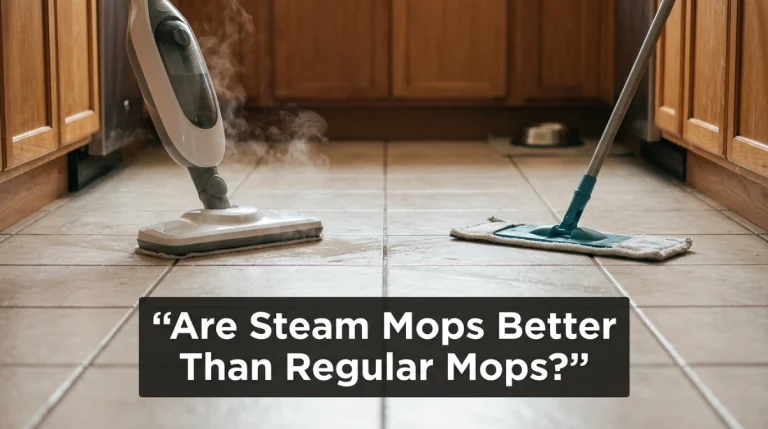
Steam mop definition: A steam mop is an electric floor-cleaning tool that heats water and sends hot vapor through a mop head and washable pad. Unlike a string mop or spin mop, it normally doesn’t need a bucket of cleaning solution.
That design matters. A liquid that’s harmless in a mop bucket isn’t automatically suitable for a heated appliance.
Why people want to add vinegar
White vinegar contains acetic acid and is commonly used for household cleaning. People usually consider adding it to a steam mop for one of these reasons:
- Cutting greasy residue: Vinegar can help loosen some mineral and soap deposits.
- Reducing odors: Its acidity can neutralize some odor-causing residues.
- Removing hard-water scale: Acetic acid can dissolve calcium-based mineral deposits.
- Avoiding commercial cleaners: Some homeowners prefer simple DIY cleaning ingredients.
The problem isn’t that vinegar never cleans. The problem is putting an acidic cleaner through equipment that may be engineered for water only.
Safety note: Always follow the steam mop manual and your flooring manufacturer’s care instructions when they differ from general cleaning advice.
Why Can Vinegar Damage a Steam Mop?
Vinegar may affect materials inside the steam mop that you can’t see. Heat can also make repeated chemical exposure harder on seals and components.
It may attack seals and internal components
Household white vinegar is usually around 5% acetic acid. Even when diluted, frequent exposure may be unsuitable for rubber seals, gaskets, valves, adhesives, or metal parts in machines not designed for acidic liquids.
A small amount may not cause an immediate failure. Repeated use is the larger concern.
It can create warranty problems
If the manual says “water only,” adding vinegar means you’re using the appliance outside its instructions. That can complicate a warranty claim if the tank, pump, heater, or steam system later fails.
I treat the phrase water only literally. I don’t assume a 1:10 or 1:20 vinegar dilution becomes acceptable unless the manufacturer provides that ratio.
Vinegar isn’t needed to make steam work
The steam mop creates cleaning action through heat, moisture, and the physical wiping of its microfiber pad. Adding acid doesn’t increase the temperature of the steam.
For everyday soil, plain water and a clean pad often do the main job. Pre-cleaning heavy debris also helps far more than filling the tank with additives.
- Vacuum or sweep loose grit first.
- Install a clean microfiber steam-mop pad.
- Fill the tank with the recommended water.
- Keep the mop moving across approved surfaces.
- Change the pad when it becomes visibly dirty.
Section Takeaway: Vinegar can be useful as a separate household cleaner, but that doesn’t make it a safe steam-mop additive. If the appliance says water only, keep the tank water only.
What Should You Put in a Steam Mop?
For most conventional steam mops, plain water is the default. Distilled or demineralized water may be recommended where mineral buildup is a concern.
This is especially useful in hard-water areas. Fewer dissolved minerals means less scale can collect inside small steam passages.
| Liquid or Additive | Put in Tank? | Main Concern |
|---|---|---|
| Distilled water | Usually yes | Good choice for reducing mineral deposits when permitted. |
| Tap water | Model dependent | Hard water may leave scale inside the machine. |
| White vinegar | Usually no | Acid may affect components or violate manufacturer instructions. |
| Regular floor cleaner | No, unless approved | May foam, leave residue, clog pathways, or damage the machine. |
| Essential oils | No, unless approved | Oil can coat components and leave residue. |
| Bleach or disinfectant | No, unless specifically designed for it | Chemical and equipment-safety risks. |
Some newer floor-cleaning appliances have dedicated formula tanks or manufacturer-approved solutions. Those products should be treated differently from a conventional water-only steam mop.
As of 2026, the safest rule remains simple: use the liquid named in your exact product manual. Don’t assume advice for a BISSELL, Shark, Tineco, or other model automatically applies to another machine.
Safety note: Never mix cleaning chemicals inside a steam appliance. Follow the product label and appliance manual before using any solution.
Is Vinegar Safe for Every Type of Floor?
No. Even if your steam mop could tolerate vinegar, your flooring might not.
This distinction gets missed often. You need both the machine and the floor to be compatible with your cleaning method.
| Floor Type | Vinegar | Steam Mop | Safer Default |
|---|---|---|---|
| Ceramic or porcelain tile | Sometimes, when diluted | Often acceptable if manufacturer permits | Water or tile-safe cleaner |
| Hardwood | Often discouraged | Often discouraged | Barely damp microfiber mop and approved cleaner |
| Engineered wood | Check finish maker | Check flooring instructions | Low-moisture microfiber cleaning |
| Laminate | Usually unnecessary | Commonly discouraged | Lightly damp microfiber mop |
| Vinyl or LVP | Manufacturer dependent | Manufacturer dependent | Damp microfiber and vinyl-safe cleaner |
| Marble, travertine, limestone | Avoid | Check stone and sealer guidance | pH-neutral stone cleaner |
Hardwood and engineered wood need extra care
Wood reacts to moisture, while finishes can react to unsuitable cleaners. The National Wood Flooring Association is a useful starting point for professional wood-floor care information.
On wood, I favor a microfiber flat mop that’s only lightly damp. A pH-neutral, manufacturer-approved hardwood cleaner is a safer choice than experimenting with vinegar and steam.
Laminate and LVP can be vulnerable at seams
Laminate and luxury vinyl plank may resist everyday spills, but that doesn’t automatically make them steam-safe. Hot moisture can reach joints, edges, and adhesive layers.
A cordless electric mop, spray mop, or microfiber flat mop gives you tighter moisture control. That’s often more useful than maximum heat.
Never clean acid-sensitive stone with vinegar
Marble, travertine, limestone, and other calcium-rich stones can react with acid. Vinegar may etch the surface and leave permanent dull spots.
Use a stone-safe pH-neutral cleaner instead. pH-neutral means the cleaner isn’t strongly acidic or alkaline.
Safety note: Flooring warranties and care guides override general advice. Test any new cleaning method in a hidden area before treating the whole room.
Section Takeaway: The question isn’t only whether vinegar is safe for the steam mop. Your flooring finish, seams, sealer, adhesive, and warranty also need to tolerate the cleaning method.
Can You Use Vinegar to Descale a Steam Mop?
Sometimes vinegar appears in manufacturer troubleshooting instructions, but that does not mean you should pour it into the tank. The location and procedure matter.
For example, some BISSELL troubleshooting guidance uses white vinegar to clear deposits from a removed mop head. The instructions also warn against running vinegar through the machine.
Use manufacturer-specific descaling steps
Mineral scale forms when dissolved calcium and magnesium remain after water evaporates. White crust around steam holes is a common sign.
If steam output drops, start with the least aggressive troubleshooting steps:
- Unplug the machine and allow it to cool completely.
- Check the water level and confirm the tank is seated correctly.
- Inspect accessible steam holes for visible mineral deposits.
- Follow the manual’s nozzle-cleaning procedure using only the recommended tool.
- Use vinegar only where the manufacturer specifically directs it.
- Flush removable parts exactly as instructed before reassembly.
Don’t copy a descaling method from another brand. Internal pumps, heaters, valves, and seals aren’t identical.
Prevent scale before it forms
Prevention is easier than unclogging a steam system. If your manual recommends distilled or demineralized water, using it regularly can reduce mineral deposits.
Emptying the tank after cleaning may also be recommended for some models. Check your manual before storing the appliance with water inside.
Section Takeaway: Vinegar can dissolve mineral scale, but that chemical ability doesn’t authorize you to run it through a steam mop. Use it only in the exact location and manner your manufacturer specifies.
What Should You Do If You Already Put Vinegar in the Tank?
Don’t panic if you added vinegar once. Stop using the mop and remove the solution rather than running more of it through the heater.
- Unplug the mop. Let it cool completely before handling the tank.
- Empty the reservoir. Pour out the remaining vinegar solution.
- Check the manual. Look for tank-rinsing or maintenance instructions.
- Rinse only if permitted. Don’t force water into electrical or sealed components.
- Refill correctly. Use distilled, demineralized, or tap water according to the manual.
- Watch for problems. Stop if you notice leaks, unusual smells, weak steam, or abnormal noises.
If the machine starts leaking after vinegar use, contact the manufacturer’s support team. Don’t keep operating an appliance with a suspected damaged seal or water leak.
Safety note: Never open a hot steam mop or dismantle pressurized components. Unplug it and allow it to cool first.
How Can You Use Vinegar Safely Without Putting It in the Mop?

If both the flooring manufacturer and cleaner instructions permit vinegar, keep it outside the steam mop’s tank. A separate spray bottle or bucket gives you much better control.
Use a dilute solution on compatible surfaces
For an acid-tolerant surface such as some ceramic or porcelain tile, a mild starting mixture is about 1/2 cup white vinegar per gallon of water. Don’t use that ratio as a universal recipe for every floor.
Apply only enough solution to loosen residue. Follow with a clean damp microfiber pad when rinsing is appropriate.
Spot-clean before steam mopping
A stubborn sticky patch doesn’t require treating the entire tank. Pre-clean the spot with a floor-approved product, then remove residue before using plain-water steam if the floor permits steaming.
- Remove loose dirt first.
- Apply the approved spot cleaner.
- Agitate gently with microfiber.
- Remove remaining cleaner.
- Steam mop only if both the floor and appliance permit it.
Don’t confuse cleaning with disinfecting
Vinegar isn’t automatically a registered disinfectant because it smells strong or contains acid. The EPA’s disinfectant guidance distinguishes routine cleaning from products registered for sanitizing or disinfecting.
The CDC’s household cleaning guidance also notes that regular cleaning is enough in many home situations. When disinfection is needed, use an appropriate product according to its label.
Never mix vinegar with bleach or bleach-containing products. The CDC’s bleach safety guidance warns against mixing bleach with other cleaners or disinfectants.
Safety note: Use ventilation when handling cleaning chemicals and keep products away from children and pets. Never combine cleaning products unless the label specifically instructs you to do so.
Frequently Asked Questions
Can I put diluted vinegar in my steam mop?
Usually not. Diluting vinegar doesn’t make it automatically safe for pumps, seals, heaters, or tanks designed for water only.
Use diluted vinegar only if your exact steam-mop manual explicitly permits it and provides instructions.
Can I put vinegar in a Shark steam mop?
Check the manual for your exact Shark model rather than relying on advice for another machine. If the instructions specify water or distilled water only, don’t add vinegar, floor cleaner, oils, or homemade solutions.
Can I put vinegar in a BISSELL steam mop?
BISSELL instructions vary by model and task, but its support information for some steam mops specifically says not to put vinegar in the water tank. Certain troubleshooting procedures may use vinegar on a removed mop head, which is different from running vinegar through the machine.
Can I use apple cider vinegar instead of white vinegar?
I wouldn’t put apple cider vinegar in a steam mop. It contains additional compounds and can leave more residue than distilled white vinegar.
Even white vinegar should stay out of a water-only tank unless the manufacturer explicitly approves it.
Does vinegar make a steam mop disinfect better?
Don’t assume it does. Cleaning, sanitizing, and disinfecting are different processes, and vinegar isn’t a substitute for an EPA-registered disinfectant when true chemical disinfection is required.
Follow the disinfectant’s label and make sure it’s appropriate for the floor.
Can vinegar unclog a steam mop?
Vinegar can dissolve some mineral scale, but you shouldn’t automatically run it through the machine. Follow your manufacturer’s descaling procedure because some models limit vinegar to removable components or prohibit it entirely.
What water is best for a steam mop?
Use whatever your model’s manual specifies. Distilled or demineralized water is often preferred in hard-water areas because it contains fewer minerals that can accumulate inside steam passages.
The Bottom Line: Keep Vinegar Out Unless the Manual Says Otherwise
For most households, the simplest rule is the safest: don’t put vinegar in a steam mop tank unless the manufacturer specifically says you can. Plain water, often distilled or demineralized, is the better default.
Use vinegar separately only on flooring that can tolerate acid. Natural stone, many wood finishes, and other sensitive surfaces need different care.
Before every new cleaning method, check two documents: your steam mop manual and your flooring care guide. That small step can prevent damaged seals, dull finishes, warped floors, and unnecessary repair bills.